Ozone Technologies Ltd

Municipal Water Treatment NZ

Council-grade ozone disinfection for New Zealand drinking water supplies

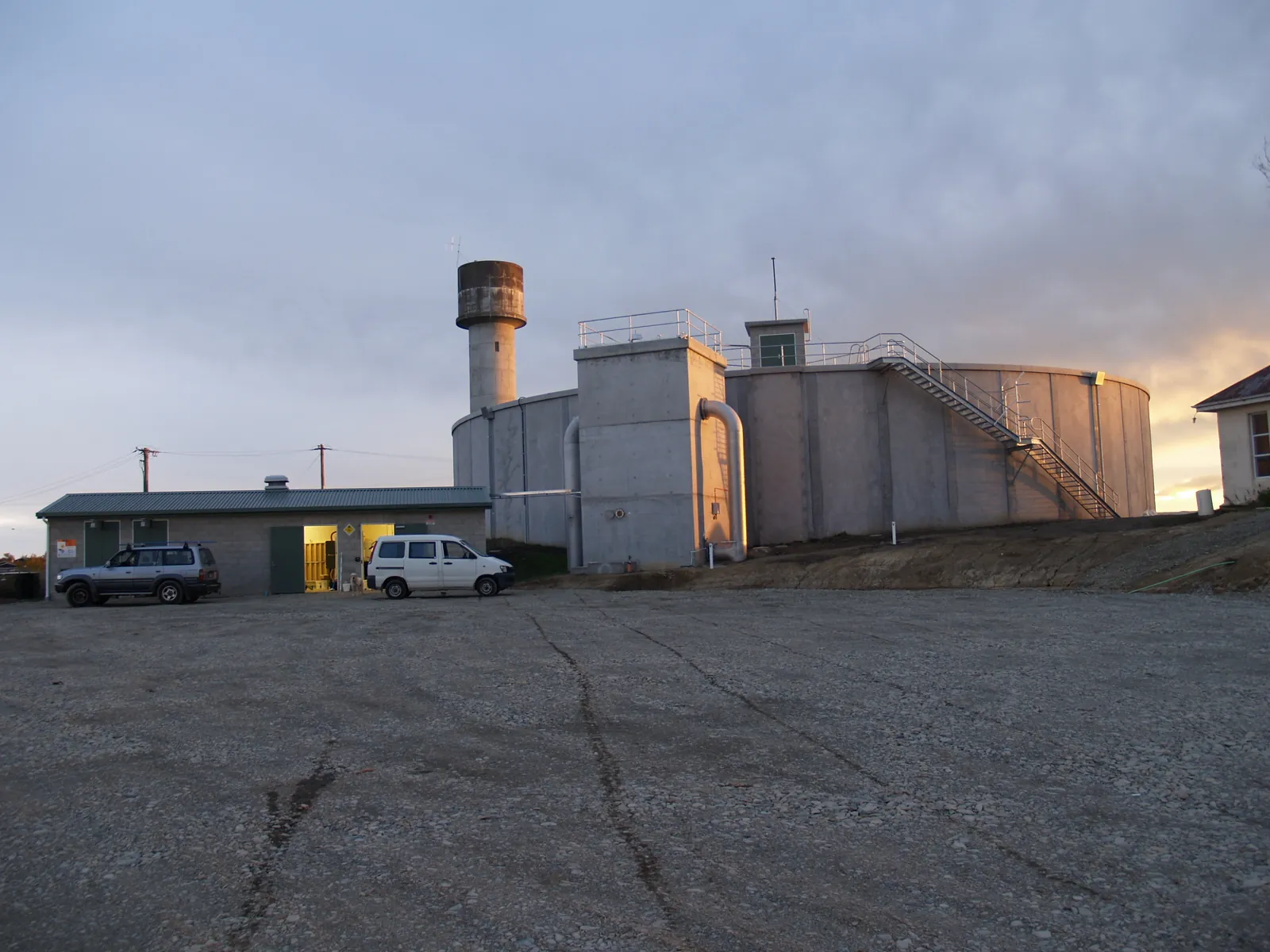
Since the Havelock North campylobacter outbreak in 2016 and the introduction of Taumata Arowai as the new national drinking-water regulator, New Zealand councils have faced unprecedented pressure to deliver safe, compliant drinking water. Ozone is the single most effective disinfectant available against the pathogens most commonly responsible for waterborne illness — including Cryptosporidium, Giardia and Campylobacter. Ozone Technologies Ltd has supplied ozone-based municipal water treatment systems to councils across New Zealand for over two decades, including Timaru District Council, Whanganui District Council, Waitaki District Council and Wellington City Council, with smaller community supplies across the country.

Get a quick system quote

Tell us the application and we'll point you toward the right ozone or oxygen system.

We typically reply within one business day. No spam — your details are only used to scope your project.

Why councils choose ozone

Chlorine remains the workhorse disinfectant for distribution residual, but it has serious limitations for primary disinfection. Chlorine cannot reliably kill Cryptosporidium — the pathogen behind some of the worst waterborne outbreaks in New Zealand's history — without dosing levels that produce unacceptable disinfection by-products (THMs, chlorates, bromates). Ozone inactivates Cryptosporidium at practical CT values, kills Giardia in seconds, and destroys taste-and-odour compounds (geosmin, MIB) that chlorine cannot. Importantly, ozone is normally used in combination with chlorine — ozone as the primary disinfectant at the plant, chlorine for distribution residual. This dual-barrier approach is increasingly the standard recommended by Taumata Arowai for surface-water and high-risk groundwater supplies.

Designing for DWSNZ and Taumata Arowai compliance

New Zealand's drinking-water regulatory framework — the Drinking-water Standards for New Zealand (DWSNZ), now administered by Taumata Arowai — requires demonstrable log reduction credit for protozoal and viral pathogens. CT-value tables in DWSNZ assign specific log credits for different ozone concentration × contact time combinations at known temperatures. Our engineering team designs every council system to a defined log-credit target, with full CT-value modelling documented in the design package. We provide the design rationale, validation testing protocol and ongoing operational monitoring requirements needed for the council's drinking-water safety plan and water-supply assessor approval. Where retrofitting an existing plant, we work with the council's existing PLC/SCADA architecture and operator workflows.

What a typical council ozone plant includes

A standard council ozone plant comprises: a PSA oxygen generator (or liquid O₂ supply) sized for peak ozone demand; one or more corona-discharge ozone generators with N+1 redundancy where critical; an ozone contactor (typically bubble-diffuser with multiple stages, sized for the required CT value); residual ozone monitoring at multiple points; quench/destruct chemistry where residual must be removed before distribution; ambient ozone detectors in every ozone-wetted room; thermal or catalytic ozone destruct on off-gas; full PLC control with HMI and SCADA integration into the council's existing telemetry; remote monitoring access for both council staff and our service team. Plants are designed for 25+ year service life with major component refurbishment scheduled at 7–10 year intervals.

Smaller supplies and rural communities

Not every supply is the size of Timaru or Whanganui. We supply ozone plants to small community supplies (a few hundred connections), marae, schools and rural lifestyle developments where Taumata Arowai compliance still applies. For smaller flows we deploy compact, skid-mounted ozone plants that fit inside a standard shipping-container building or a small purpose-built plant room. These systems use the same engineering principles and compliance documentation as our larger plants — just sized appropriately. We're often the most cost-effective compliant solution for supplies that are too small to justify large traditional treatment plants but still need primary disinfection with full protozoal credit.

Operator training and ongoing support

Council water-treatment operators are skilled professionals who don't need vendors telling them how to do their job — but ozone is a specialist technology and most water operators have far more experience with chlorine and UV than with ozone. Every council installation includes on-site operator training, a clear O&M manual written for water operators (not chemical engineers), a 24-month commissioning support period, and ongoing scheduled service. We attend the council's water-supply assessor audits and Taumata Arowai compliance reviews when invited, and our engineers are on-call to support during any compliance event or sample failure. This long-term partnership is what councils tell us is the single biggest difference between us and offshore equipment suppliers.

Key benefits

What you can expect from a Municipal Water Treatment NZ project with Ozone Technologies.

  • Effective against Cryptosporidium, Giardia, Campylobacter and viruses
  • Designed for DWSNZ / Taumata Arowai log-credit compliance
  • Removes taste, odour and colour — improves consumer satisfaction
  • No disinfection by-products (DBPs) at the plant
  • Compatible with chlorine residual for distribution (dual-barrier)
  • Skid-mounted options for small community supplies
  • Full SCADA integration with council telemetry
  • Operator training, O&M manual and water-supply-assessor support
  • Used by Timaru, Whanganui, Waitaki and Wellington councils
  • 25+ year service life with scheduled mid-life refurbishment
Quick answers

Common questions

How is ozone used in municipal drinking water treatment?
Ozone is normally used as the primary disinfectant at the treatment plant — it inactivates Cryptosporidium, Giardia, bacteria and viruses at practical CT (concentration × contact time) values, and oxidises iron, manganese and taste-and-odour compounds. A low chlorine dose is typically added downstream so the distribution network retains a residual.
Does ozone help with taste and odour?
Yes. Ozone is one of the few water-treatment processes that reliably destroys the earthy / musty compounds geosmin and 2-methylisoborneol (MIB), which are common in surface and bore waters and which chlorine alone does not remove. This makes ozone particularly valuable for council supplies that have algae- or sediment-derived taste issues.
Can ozone treat bacteria, viruses, iron and manganese?
Yes — at appropriate doses and contact times, ozone inactivates the main microbial targets in drinking water (including chlorine-resistant protozoa) and chemically oxidises soluble iron and manganese into insoluble forms that can then be filtered out. The exact dose is sized from a water-quality audit.
Does ozone provide residual disinfection in pipe networks?
No — ozone reverts to oxygen after contact with water and so cannot carry a residual through the distribution network. Council systems normally combine ozone as the primary disinfectant at the plant with a small chlorine residual added afterwards for the reticulation network. This dual-barrier approach is the standard recommended for higher-risk supplies.
How does ozone compare with chlorine or UV?
Chlorine is cheap and provides a residual, but it cannot reliably inactivate Cryptosporidium at safe doses and can form by-products with organic matter. UV inactivates pathogens effectively but provides no oxidation (it does not address taste, odour, iron or manganese) and no residual. Ozone provides strong primary disinfection plus useful oxidation, but no residual — so it is typically paired with chlorine for distribution.
Is ozone suitable for New Zealand council water supplies?
Yes. Ozone is well-suited to NZ council supplies — particularly higher-risk surface and groundwater sources — and our designs are documented to DWSNZ / Taumata Arowai CT-value requirements. To talk through your supply, get in touch at /contact, or see /case-studies for council reference work.

More background: case studies · about Ozone Technologies · contact an engineer.

Get expert advice on your municipal water treatment project

Tell us about your application and we'll come back to you within one business day with a tailored response from one of our engineers.