Ozone Technologies Ltd

Industrial Ozone Generators NZ

High-capacity ozone generation for large-scale water, process and air applications

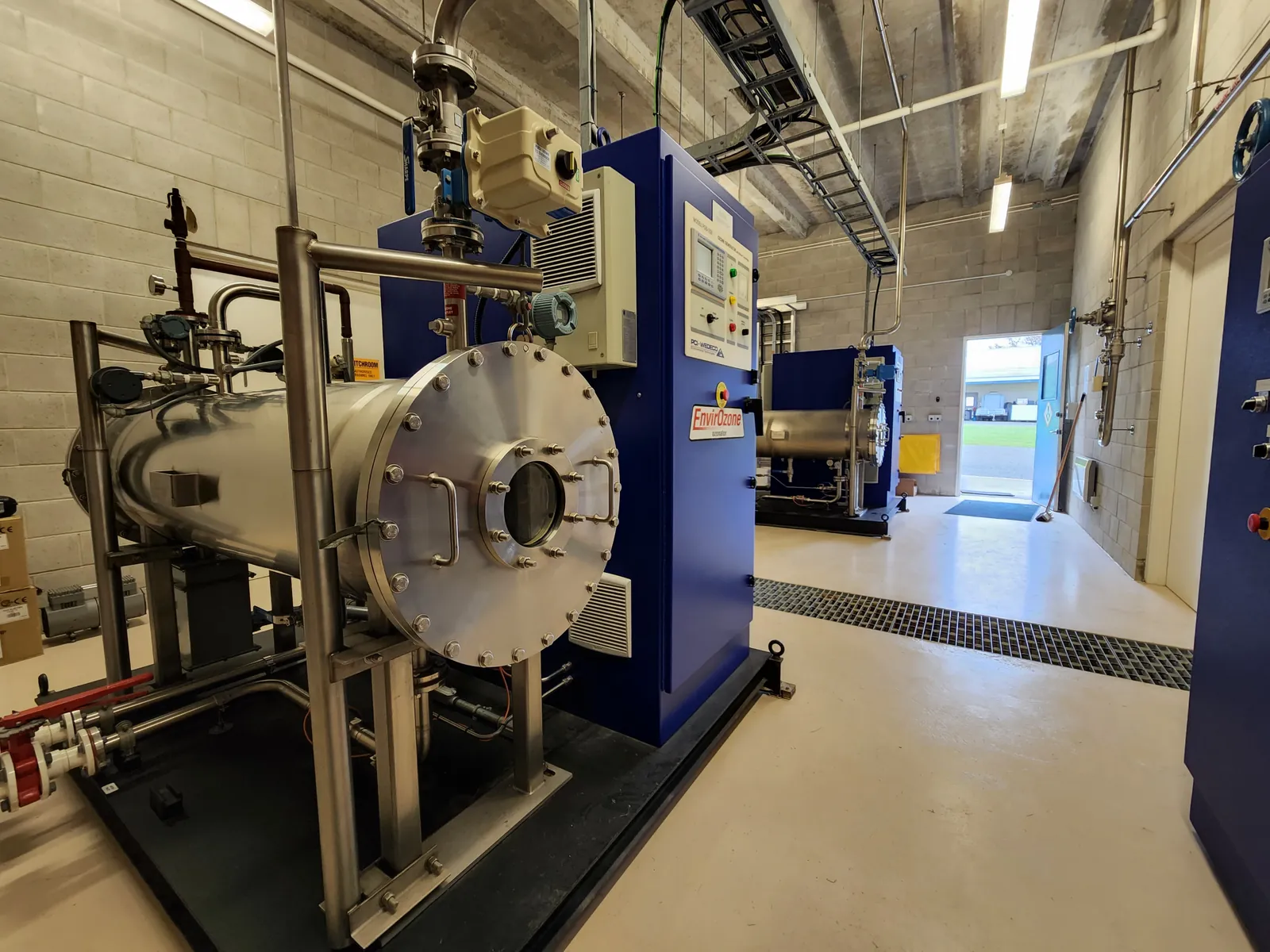
Industrial ozone generators are large, high-output corona-discharge units typically rated from 500 g/hr to 5 kg/hr (and skid-stacked beyond), designed for continuous 24/7 operation in critical applications such as municipal drinking-water plants, major food and beverage processors, large RAS aquaculture systems and industrial process water. Ozone Technologies Ltd designs, manufactures and supports industrial ozone generators specifically for New Zealand industry — engineered for the local grid, local water chemistry and local service realities.

Get a quick system quote

Tell us the application and we'll point you toward the right ozone or oxygen system.

We typically reply within one business day. No spam — your details are only used to scope your project.

What makes a generator 'industrial'?

The difference between a commercial and an industrial ozone generator is not just capacity — it's reliability, redundancy and total cost of ownership. Industrial generators run continuously for years between major services, often unattended. They need: high-purity oxygen feed (≥93% from PSA or liquid O₂); high ozone concentration (≥12 wt%) to minimise off-gas and contactor size; precision frequency-controlled power supplies for stable output; closed-loop cooling with chiller redundancy; multi-zone safety detection; ozone destruct sized to handle worst-case off-gas; and full PLC/SCADA integration with the plant's wider control system. Our industrial generators are built to these standards as a baseline, not as upgrade options.

Applications for industrial-scale ozone

Industrial ozone generators serve markets where chemical-free, residue-free disinfection is non-negotiable. Municipal drinking water is the classic application — councils across New Zealand use ozone to inactivate Cryptosporidium and Giardia (which chlorine cannot reliably kill), oxidise manganese and iron, remove taste-and-odour compounds, and reduce disinfection by-product formation downstream. Major bottled-water producers rely on industrial ozone for guaranteed microbial control and bromate-managed bottling. Industrial wastewater treatment uses ozone for tertiary disinfection, BOD/COD reduction, colour removal and refractory organics oxidation. Large RAS aquaculture systems use high-capacity ozone for pathogen control across multi-tank, multi-tonne fish operations. Industrial cooling towers and process loops use ozone to eliminate biofilm and Legionella risk without the corrosion and discharge issues of chlorine.

Design considerations for large systems

Large ozone systems are not just bigger small systems — they bring engineering challenges that demand specialist expertise. CT-value calculations (concentration × contact time) must be done rigorously for regulatory acceptance. Contactor design is critical: bubble-diffuser, side-stream injection, or U-tube depending on flow, concentration and head. Oxygen feed must be sized correctly — typically PSA on-site generation rather than bottled gas. Heat removal becomes significant at high outputs — industrial generators routinely dissipate tens of kilowatts and require dedicated chilled-water loops. Off-gas destruct must be thermally or catalytically rated for the worst-case ozone concentration leaving the contactor. Safety detection coverage of all ozone-wetted spaces is mandatory. Our engineering team handles every one of these elements as a single integrated package.

Compliance, documentation and council acceptance

Industrial installations — especially municipal drinking water — require comprehensive documentation. Our standard project package includes: process flow diagram, P&IDs to ISA-5.1, CT-value design report, hazard and operability (HAZOP) study, instrument list, valve schedule, electrical schematics, control philosophy, factory acceptance test (FAT) report, site acceptance test (SAT) report, operator training records and full O&M manual with parts list. For drinking water installations we work directly with the water-supply assessor and Taumata Arowai compliance pathway. For food and beverage installations we provide HACCP-aligned validation, including microbial challenge testing where required. Every system is delivered with everything needed for handover and audit.

Long-term partnership, not a one-off sale

Industrial ozone systems run for 20+ years. The supplier you choose isn't a one-off purchase — they're a long-term partner. We've supported some of our installations continuously for over two decades, with successive generations of engineers familiar with the original design. We hold OEM-level spares for every generator we have ever shipped. We maintain digital records of every PLC program, instrument calibration and dielectric replacement. We offer life-extension upgrades (e.g. swapping older transformer-based power supplies for modern inverter drives) without replacing the whole plant. When you buy an industrial ozone generator from us, you buy decades of follow-through.

Key benefits

What you can expect from a Industrial Ozone Generators NZ project with Ozone Technologies.

  • 500 g/hr to 5 kg/hr standard range, multi-unit skids beyond
  • Continuous 24/7 operation, designed for unattended duty
  • ≥12 wt% ozone concentration with PSA O₂ feed
  • Full HAZOP, FAT and SAT documentation as standard
  • Taumata Arowai / DWSNZ compliance support for drinking water
  • Closed-loop chilled cooling with redundancy options
  • Catalytic or thermal ozone destruct, sized for worst-case off-gas
  • Integrated multi-zone ambient ozone safety detection
  • OEM-level spares stocked locally, indefinite supply commitment
  • Decades-long support — successive generations of NZ installations
Quick answers

Common questions

What are industrial ozone generators used for?
Industrial ozone generators feed large-scale water and process applications: municipal drinking-water plants, major food and beverage processors, large RAS aquaculture, dairy CIP, industrial cooling-tower disinfection, advanced oxidation for difficult contaminants, and process water for wineries and breweries. Typical capacities run from 500 g/hr up to several kg/hr.
Can ozone reduce chemical use in industrial water treatment?
In many applications, yes. Ozone replaces or supplements chlorinated sanitisers, peracetic acid, hydrogen peroxide and other oxidising chemicals — generated on-site from oxygen and air, so there is nothing to truck, store or handle. Whether ozone is the right fit depends on the contaminants, flow rates and downstream requirements, which we assess in the design phase.
Is ozone suitable for food processing and wineries?
Yes. Ozonated water is used for surface disinfection, CIP, washdown, barrel sanitation, cool-store mould control and packhouse hygiene. Because ozone reverts to oxygen it leaves no chemical residue on food-contact surfaces. See /solutions/breweries-wineries and /solutions/dairy-processing for application detail.
What monitoring is needed for industrial ozone systems?
Standard monitoring on an industrial ozone system includes dissolved-ozone concentration in the treated water, ambient ozone gas concentration in the plant room, generator output current and power, feed-gas flow, pressure and dewpoint, and contactor / destruct temperatures. All data is logged in the local PLC and is normally exposed to the site SCADA.
What safety controls are required?
Industrial ozone systems are designed around a defence-in-depth philosophy: ambient ozone detectors with alarm and shutdown, dissolved-ozone monitoring with high-limit interlocks, an ozone-destruct unit on contactor off-gas, pressure and temperature interlocks on the generator, ventilation interlocks, clearly labelled isolation valves and operator training. All controls are documented in the system FMEA and HAZOP.
Can Ozone Technologies design and service systems in New Zealand?
Yes — design, manufacture, installation, commissioning and ongoing service are all delivered by our own team from Napier. Critical spares are held locally and we offer scheduled service contracts and remote monitoring options. To scope a project, contact us at /contact.
More background: case studies · about Ozone Technologies · contact an engineer.

Get expert advice on your industrial ozone generators project

Tell us about your application and we'll come back to you within one business day with a tailored response from one of our engineers.